| Around 10% of the world's total fish species can be found just within the Great Barrier Reef. |
|
|
|
| The toxin in puffer fish is 1200 times deadlier than cyanide. |
|
|
|
| Strange fish facts |
| Many Fish can taste without even opening their mouths. |
|
|
| Fish Facts |
| Most brands of lipstick contain fish scales |
|
|
| Did you know? |
| American Lobsters have longer life spans than both cats and dogs, living over 20 years. |
|
|
| When you need a good reason to go fishing! |
| Going fishing outdoors increases your vitamin D, which helps regulate the amount of calcium and phosphate in your body, keeping your bones and teeth healthy. It boosts your immune system and has been linked to fighting depression. |
|
|
| Some fishes lay their eggs on land instead of in the water |
| The mudskipper even takes this further, even mating on land. These fish burrow and lay their eggs in mudflats before returning to the water. |
|
|
| In three decades, the world's oceans will contain more discarded plastic than fish when measured by weight, researchers say. |
| |
|
|
| As of 2020, there were 34,000 known fish species around world. That’s more than the number of species in all other vertebrates: birds, reptiles, mammals, and amphibians combined. |
|
|
|
| God Bless The Troops |
| We sleep safely in our beds because rough men stand ready in the night to visit violence on those who would do us harm. - George Orwell |
|
|
| One fish is called a fish. Two or more are still called fish. |
| However than one species of fish are called fishes. |
|
|
| Did you know that |
About 60% of US Anglers practice catch and release.
Women make up about 33% of fresh water anglers and
about 85% of fresh water anglers begin fishing at 12 years old. |
|
|
| Just how man species of fish are there? |
| As of 2020, there were 34,000 known fish species around world. That’s more than the number of species in all other vertebrates: birds, reptiles, mammals, and amphibians combined. |
|
|
| Even Catfish are finicky |
| Taste Buds ? Catfish have a more refined sense of flavor than humans. Our 10,000 taste buds may seem like a lot, but catfish can have as many as 175,000. This helps them find the exact location of their next meal. |
|
|
|
|
|
 |
|
Aug 16, 2009; 10:41AM
|
|
Category: Fishing Tackle Wanted
|
|
Name for Contacts: Bill Warhol
|
|
Phone: 763-633-0565
|
|
City: Princeton
|
|
State: MN
|
|
Country: USA
|
| Description: |
Looking for 9' light up pencil type bobber/float. Originally made by Blue Fox???
|
|
|

|
|
|
2011 fishing photo contest
A free tackle package to the photo with the most votes
|
Christina4 lb'sSmallmouth bass |

Click the image for full story |
| Christina, 22 |
|---|
| My cousin and I both landed 4lb smallmouths at the same time.
It w... |
|
720 vote(s)
|
|
|
 |
|
Jul 30, 2001; 10:43PM - Trolling for albacore with rapala style lures.
|
|
Category: Fishing tips and tricks
|
|
Author Name: Matt
|
 Tip&Trick Description 1:
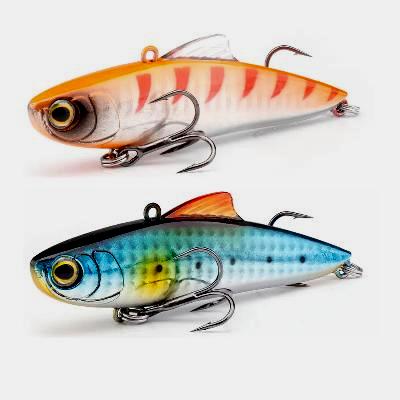
I just returned from a fishing trip on the Fin Fever out of Newport Beach, California and was I impressed with what they used to catch the tunas! We used Yozuri Hydromagnums in the to troll for the albacore tunas. I am telling you these were the hottest lures I have seen in a long time! They removed the front treble hook from the lures to make removal of the lure easier and faster from the fish. After multiple double and triple hookups I am convinced these are the hottest lures around! I asked to take a photo of the lures so I could get some and thanks to the crew and their hot tricks we caught our limit (all we wanted till we were tired of pulling on the fish!) Great trip with a great group of guys!! Hope this photo helps.......Matt
Tip&Trick Description 1:
I just returned from a fishing trip on the Fin Fever out of Newport Beach, California and was I impressed with what they used to catch the tunas! We used Yozuri Hydromagnums in the to troll for the albacore tunas. I am telling you these were the hottest lures I have seen in a long time! They removed the front treble hook from the lures to make removal of the lure easier and faster from the fish. After multiple double and triple hookups I am convinced these are the hottest lures around! I asked to take a photo of the lures so I could get some and thanks to the crew and their hot tricks we caught our limit (all we wanted till we were tired of pulling on the fish!) Great trip with a great group of guys!! Hope this photo helps.......Matt |
|
|
|
|
|
|
 |
|
Dec 9, 2007; 09:35PM - Custom Fit Boat Cover
|
|
Category: [other]
|
|
Price: Varies
|
|
Name for Contacts: Elite Outdoors
|
|
Phone:
|
|
City:
|
|
State: MO
|
|
Country: USA
|
 Description 1:
When only the best will do! A perfect fit: measured, tucked, darted and approved by Hurricane's own pattern and design craftsman. Vulnerable wear and stress points are double reinforced with an extra tough material sewn to the underside of the cover. An unbreakable 1/4' poly draw rope sewn with the perimeter hem enables the cover to be cinched tight to the hull. 1' poly loops are sewn around the perimeter of the cover to accept a Hurricane strap/buckle tie down kit, bungee cords, or rope ties for positive securing to the boat. Built tough to take the exposure and abuse that boat covers are exposed to when trailering, storing, or mooring.
Description 1:
When only the best will do! A perfect fit: measured, tucked, darted and approved by Hurricane's own pattern and design craftsman. Vulnerable wear and stress points are double reinforced with an extra tough material sewn to the underside of the cover. An unbreakable 1/4' poly draw rope sewn with the perimeter hem enables the cover to be cinched tight to the hull. 1' poly loops are sewn around the perimeter of the cover to accept a Hurricane strap/buckle tie down kit, bungee cords, or rope ties for positive securing to the boat. Built tough to take the exposure and abuse that boat covers are exposed to when trailering, storing, or mooring.
Westland has over 16,000 Exact Fit Custom Cover patterns for over 200 different boat manufacturers. You will have your choice of 3 fabrics and over 30 colors.
To check to see if we have a custom cover pattern for your boat please Email Us your year - make - model - any accessories like towers, swim platforms, bow rails, radar archs, etc. |
|
 Description 2:
Sharkskin color chart...also, available in Sunbrella
Description 2:
Sharkskin color chart...also, available in Sunbrella |
|
|
|
|
 |
|
Jul 10, 2007; 07:22PM - JULY 10th FISHING SUMMARY
|
|
Category: Carolina's
|
|
Author Name: Captain Butch Foster
|
Lets hope this heat and wind doesn't hurt the fishing. We are having to cancel trips this week so far due to rough conditions from a 20 to 30 knot SW wind. The whole week doesn't look good at this time. But, time will tell the full story!!
Before the windy and HOT weather we were having great catches on the Red Grouper. Limits were not uncommon. Baits that were producing were live Cigar Minnows, Live Pogys, frozen Cigar Minnows and hand size pieces of cut baits.
Also, find a spot where the current was not 'screaming', the deeper the water the less current. The areas around the Tower in 40 feet of water has had terrible currents lately and I have found that to the East and South West in the deeper water, 80 to 100 feet the current has not been bad at all. But, by the time you read this, this could all be changed to a different scenerio!!
In the less current areas is where you will have your best luck on Bottom Fish like Black Bass, Vermillion Snapper, Grey Snapper, Triggerfish, Joltheads, etc. Squid, and cut bait will serve well here to get these tasty fish on the hook!!
King Mackeral were biting well at the areas like the Horseshoe's, 15 mile rock, Jungle, 90/90, etc. Here, you will do well to get some live pogys. However, if the live bait is hard to get, they will bite the frozen cigar minnows good as well. I like to pull them on the 'Hank Brown' style lead heads, this will make the dead minnows swim to look like they are alive. Just be sure you hook them straight up from the botton through the center between the eyes to prevent them from spinning. I like to check them at boat side for running properly before I send them back in the spread.
Keep an eye open while Bottom Fishing for Mahi-Mahi. We have been having them come up around the boat while grouper fishing. Keep a couple of spinning rods ready, and when you see them, pitch a small quarter sized piece of squid at them on a plain #4 wide bend hook. Keep one Mahi-Mahi in the water hooked up at all times, this will keep the school around the boat long enough to catch several before they move on!!
The Flounder fishing season is here. The inshore reefs are producing with mullet minnows rigged 'carolina style'. Speckled Trout have been biting well off the piers on live shrimp as have the King Mackeral on live baits!!
Spanish Mackeral fishing is 'spotty'. The fishing for these have been tough with all the Sargasco Grass that has blown in on the beach from offshore. I have had reports of a lot of Spanish Mackeral action taking place at the 90/90 and Jungle. Try your 00 Clark Spoons in gold and/or silver pulled on #1 and #2 Planers around 6 to 7 knots. Watch for the white terns working the schools of glass minnows that the Spanish chase to the surface, a dead give away that Spanish are in the area, you will also see the spanish jumping out of the water a lot of times when feeding, but, not always.
Spade fish are on the reefs now in good numbers. A piece of 'jellyball' will usually trigger a bite from the verocious fighters. Don't rig up to lite here, or you won't land these hard fighters. Keep a few to eat, but please release what you can't eat to help preserve these fish for future fishermen!!
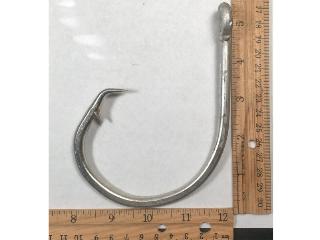
SHARKS, OH YEAH!!!! The Shark fishing is wide open now!!! There have been some 'monsters' hooked up lately!!! Some have eaisly broken 150 lb. test line lately. But, some in the 100 pound range have also been brought to the boat. Baits here include Pogys, Spanish Mackeral or just about any kind of oily, fishy chunk of bait will work here. Just tie a big circle hook 10/0, 12/0, etc on you line, wire leader is up to you, free line it out behind the boat while drifting around the shoals or off the beach and HOLD ON!!!!!!!!!!
FISH ON!!!
Capt Butch
www.yeahrightcharters.com
|
|
|
|